Ringkeubeurik
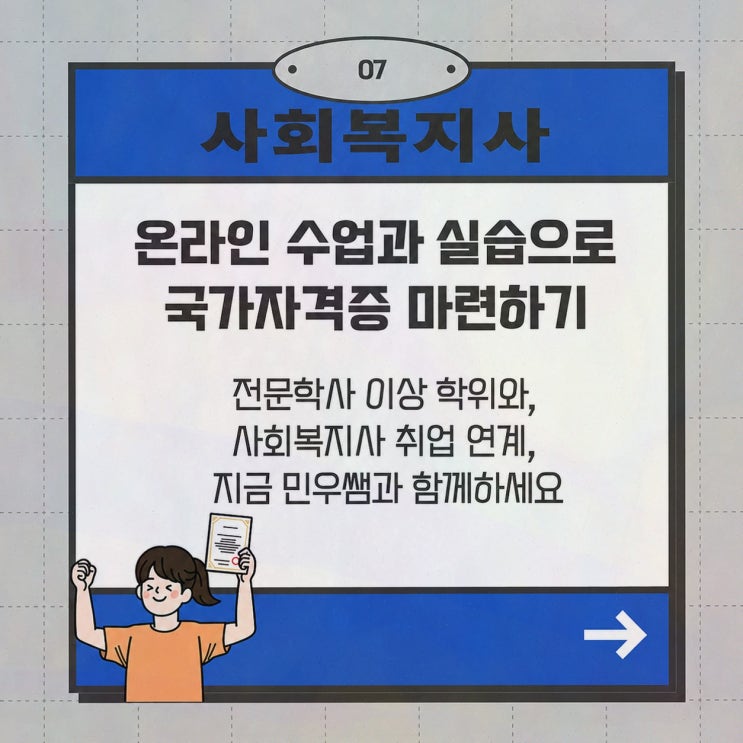
Social worker certification is a credit bank system-based qualification process that is completed only when academic requirements, completion of required and elective social welfare-related courses, and social welfare field practicum standards are all satisfied.
Highlights
- It is safer to first check academic requirements and statutory course and practicum standards rather than major status.
- Theory can reduce the burden through online study, but the field practicum must be planned separately as an offline requirement.
- The completion roadmap differs depending on the starting point, such as high school graduation, university expulsion or dropout, or non-major junior college or four-year university graduation.
- After obtaining the qualification, a foundation is created to enter various fields such as social welfare centers, senior and disability welfare facilities, and community child centers.
Key information
| Qualification type | Social Worker Level 2post |
|---|---|
| Education requirements | Junior college graduation or higher (high school graduates pursue a degree program concurrently)post |
| Required courses | 10 coursesverified |
| Elective courses | 7 coursesverified |
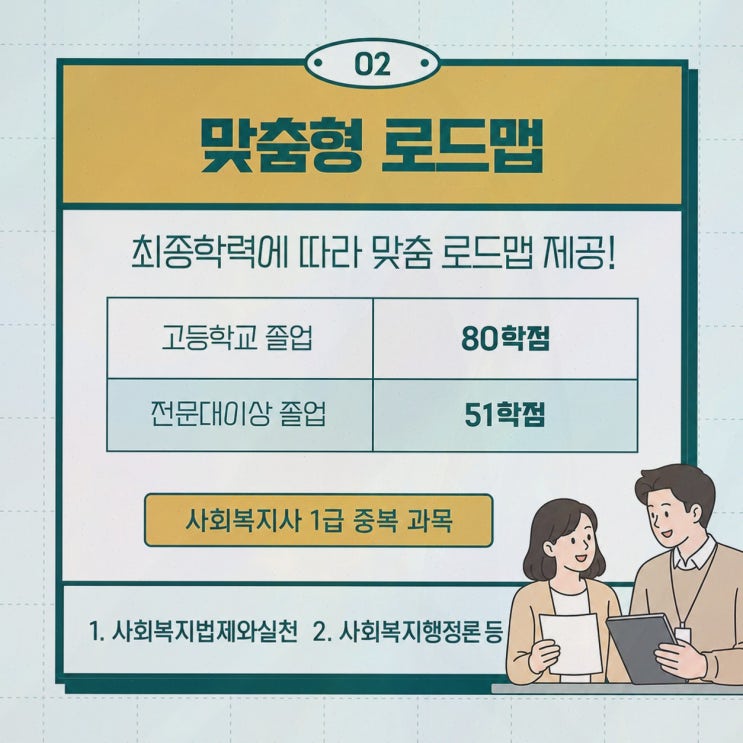
| Total completed courses | 17 courses, 51 credits or moreverified |
| Field placement hours | 160 hours or moreverified |
| Practicum seminar hours | 30 hours or moreverified |
| Completion method | Theory courses taken online, field practicum conducted offlinepost |
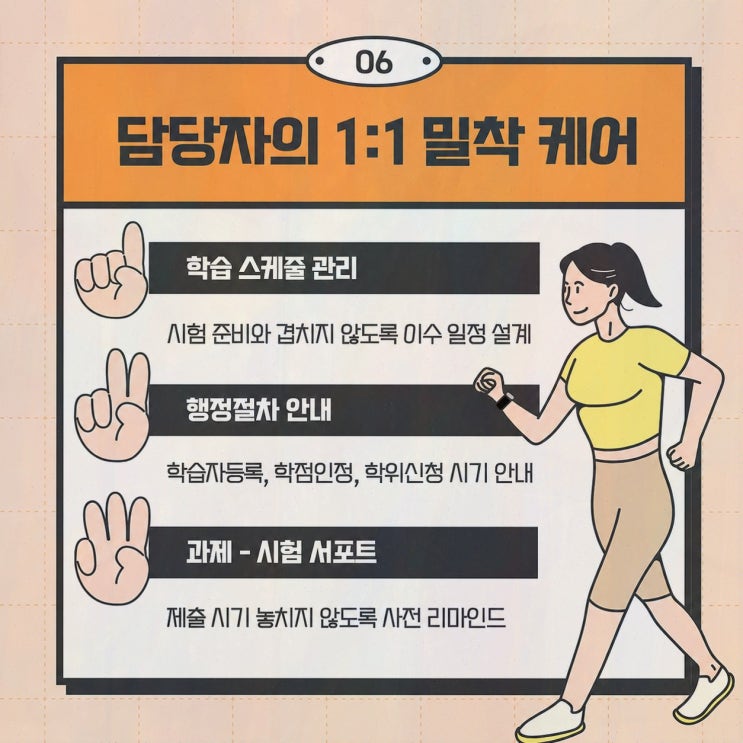
| Administrative procedures | Learner registration, credit recognition application, degree application, practicum course application, certificate issuance applicationpost |
| Career fields | Social welfare centers, senior and disability welfare facilities, community child centers, etc.post |
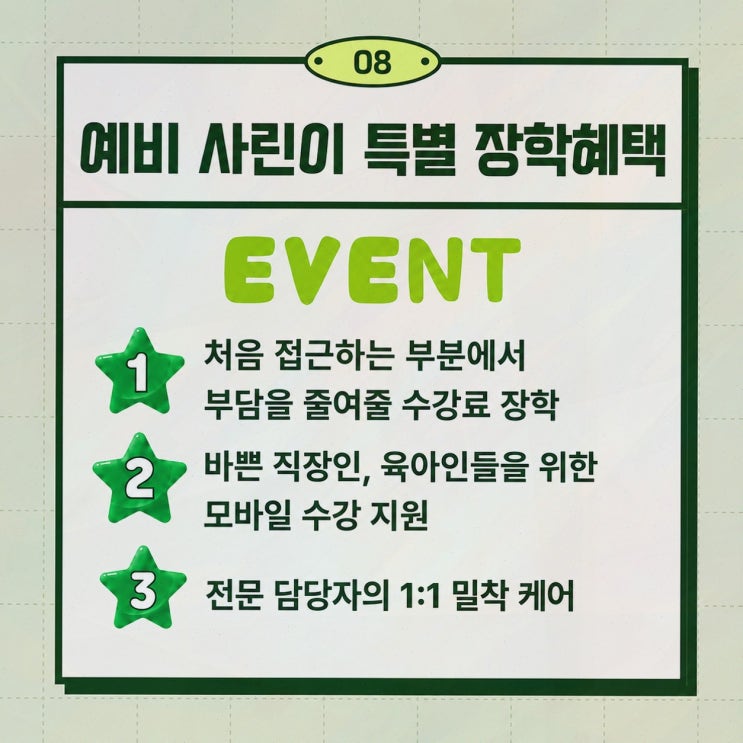
| Support benefits | Tuition scholarships for office workers and job seekers, mobile learning supportclaim |
| Counseling channels | Ringkeubeurik one-on-one plan design, Naver Form surveypost |
Portfolio & cases
- Linkbrick — Customized completion roadmap for social worker certification and semester-by-semester administrative schedule guidance
- Naver Form survey — Free consultation and design participation channel
Provided by the business · not independently verified
Frequently asked questions
Q. Is a major absolutely required to obtain social worker certification?
What matters more than whether you have a major is whether you satisfy the academic requirements, completion of required and elective social welfare-related courses, and social welfare field practicum standards. Non-major junior college or four-year university graduates can also set a path in line with the required course completion requirements.
Q. Can all theory classes be taken online?
Theory courses other than the social welfare field practicum can be conducted online. However, the practicum cannot be replaced online, so at a practicum institution selected by the Minister of Health and Welfare, you must complete 160 hours or more and 30 hours or more of practicum seminars.
Q. I am a high school graduate; is it possible to obtain social worker certification?
It is possible. High school graduates proceed by designing a degree program and certification process together, and can pursue the social worker certification process concurrently with an associate degree or bachelor's degree program.
Q. How are required and elective courses structured?
The general standard for new completion is 10 required courses and 7 elective courses, totaling 17 courses and 51 credits or more. Even if course names are similar, recognition may differ depending on required/elective classification and recognition requirements, so confirmation is needed.
Q. What should be handled for the credit bank system administrative procedures?
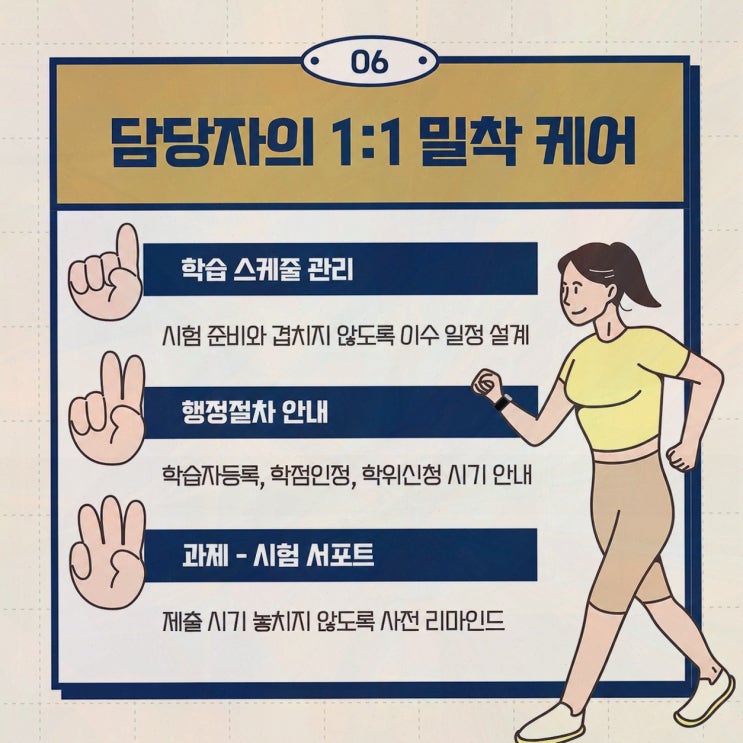
You must proceed according to designated periods for learner registration, credit recognition application, degree application, practicum institution confirmation, practicum course application, and certificate issuance application. It is advisable to receive step-by-step guidance on semester course plans and administrative schedules to reduce omissions and mistakes in application timing.
Statutory standards such as the number of required and elective courses, credits, and practicum hours match confirmed materials, but some details such as the required period for high school graduates and the number of practicum attendances are at a reference level based on the original text's guidance.